
The Future of Seafood Depends on More Than the Catch
As conversations around nutrition, sustainability, and food security continue to evolve, one message has become increasingly clear: America needs to eat more seafood — and the seafood industry has a responsibility to help make that possible in a healthy, sustainable way.
In a recent article, America Is Being Told to Eat More Seafood, we explored how public-health guidance, nutrition science, and consumer demand are aligning around the benefits of seafood — from lean protein to omega-3 fatty acids — and why access matters just as much as awareness. That same question of access is at the heart of Southstream’s support for SeaShare, a nonprofit dedicated to getting nutritious seafood into the hands of people who need it most.
Seafood as Nutrition, Not Just a Commodity
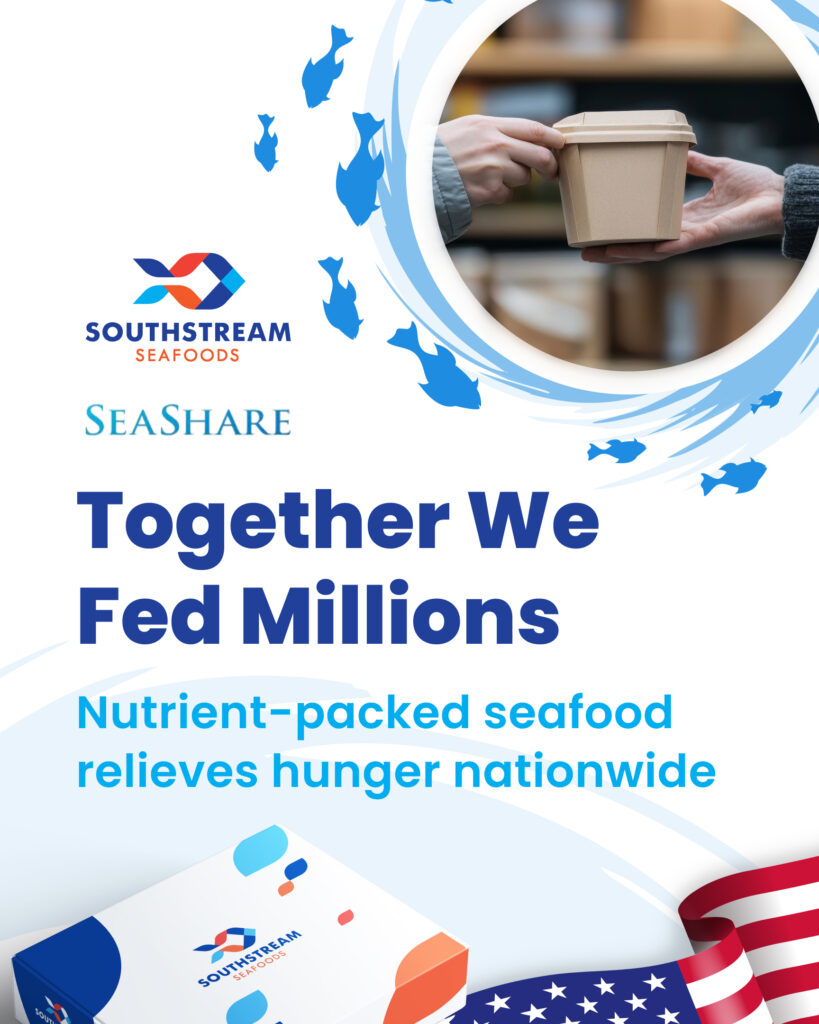
SeaShare works directly with fishermen, processors, distributors, and food banks to donate seafood and logistics services nationwide. In 2025 alone, more than 1.8 million pounds of seafood were donated through SeaShare’s network, helping provide high-quality protein to food-insecure families across the United States. Unlike many donated food items, seafood offers complete protein and essential nutrients that are often lacking in emergency food systems.
The connection to the broader “eat more seafood” conversation is clear: promoting seafood consumption only matters if people can actually access it. SeaShare helps close that gap by ensuring that the nutritional value of seafood reaches communities that might otherwise be excluded from it.
For Southstream, supporting SeaShare reflects a belief that nutrition, equity, and responsible distribution are part of the same equation — not an add-on to the business of seafood, but a continuation of it.
Protecting the Source: Healthy Oceans, Healthy Supply
If SeaShare addresses how seafood reaches people, Global Coralition focuses on protecting where seafood begins.
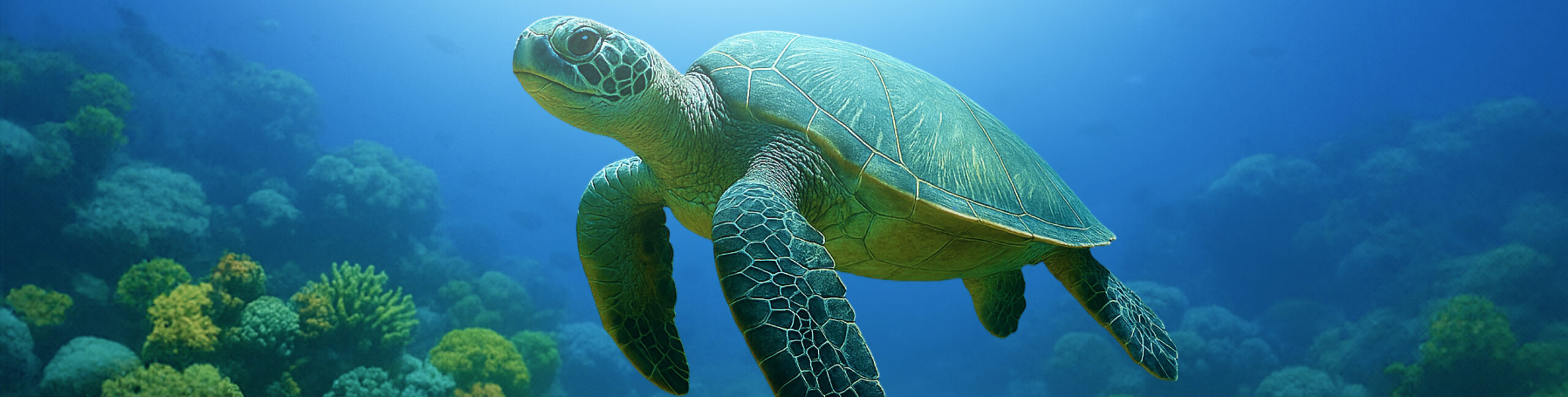
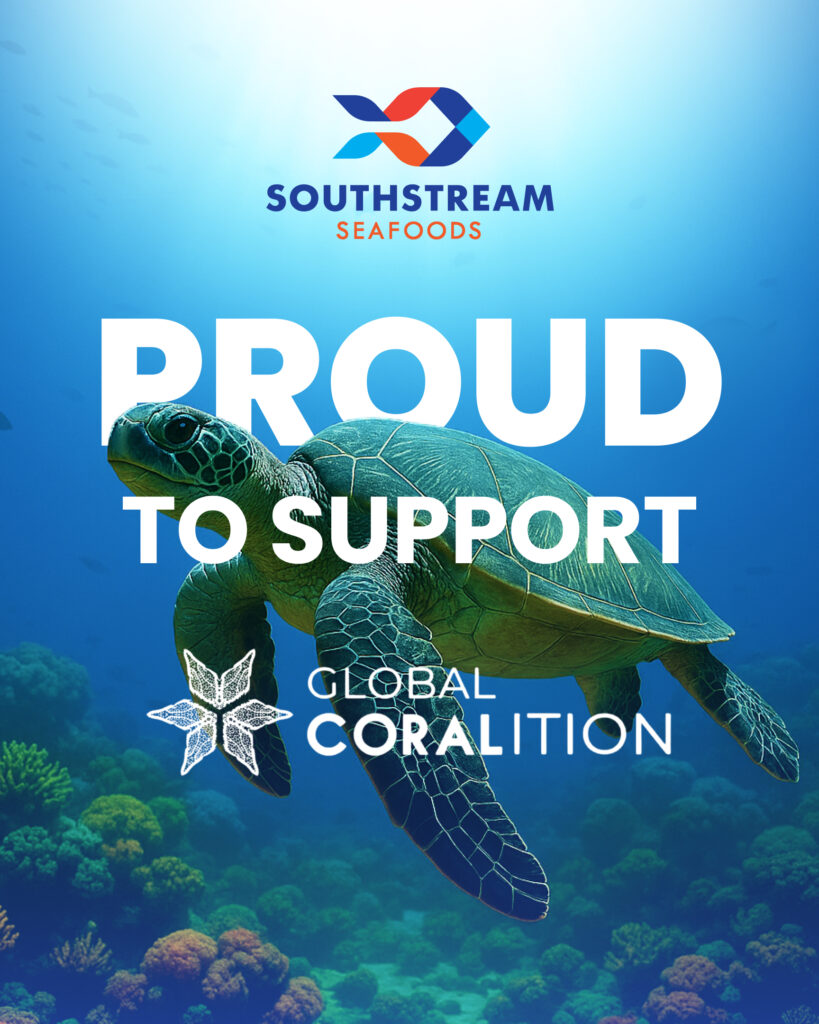
Global Coralition is dedicated to coral reef restoration and the long-term health of marine ecosystems, working closely with coastal and fishing communities whose livelihoods depend on the sea. Coral reefs play an outsized role in ocean biodiversity, coastal protection, and sustainable fisheries, yet they are among the most threatened ecosystems on the planet.
Southstream’s support for Global Coralition is rooted in a deeply personal understanding of that reality. As Southstream President Mark Soderstrom explains:
“When I learned about the work they’re doing to protect coral reefs and partner with fishing communities, it resonated with me — as a diver and as someone whose family has lived off the ocean. Healthy reefs mean healthy oceans, and healthy oceans matter to all of us.”
For Soderstrom, the connection goes beyond conservation language. He often describes the ocean as his equivalent of farmland — not something he owns, but something he depends on and must care for.
“I didn’t grow up farming the land,” he says. “I grew up near the ocean. The ocean is my farm. If you rely on it for your livelihood, you have a responsibility to give back and to help keep it healthy.”
That perspective frames ocean stewardship not as an abstract environmental ideal, but as practical, long-term thinking for an industry that depends on stable ecosystems to survive.
An Industry Responsibility, Not a Marketing Message
Supporting organizations like SeaShare and Global Coralition is not about branding or recognition. It reflects a broader truth facing the seafood sector: industries that rely on natural systems and global supply chains cannot separate business success from social and environmental responsibility.
Feeding people well and protecting marine ecosystems are not competing priorities — they are interdependent. Without healthy oceans, there is no sustainable seafood supply. Without equitable access, the nutritional benefits of seafood remain theoretical for millions of people.
Southstream’s recent donations to SeaShare and Global Coralition represent two sides of the same commitment: caring for the people and ecosystems that make seafood possible — today and for generations to come.
In an industry increasingly shaped by scrutiny, climate pressure, and public-health expectations, these partnerships serve as a reminder that the future of seafood depends not only on what we harvest, but on how responsibly we support the systems behind it.
If you’d like to learn more about Southstream’s approach to seafood, nutrition, and ocean stewardship, we’re always happy to continue the conversation — contact our team.